 Save It
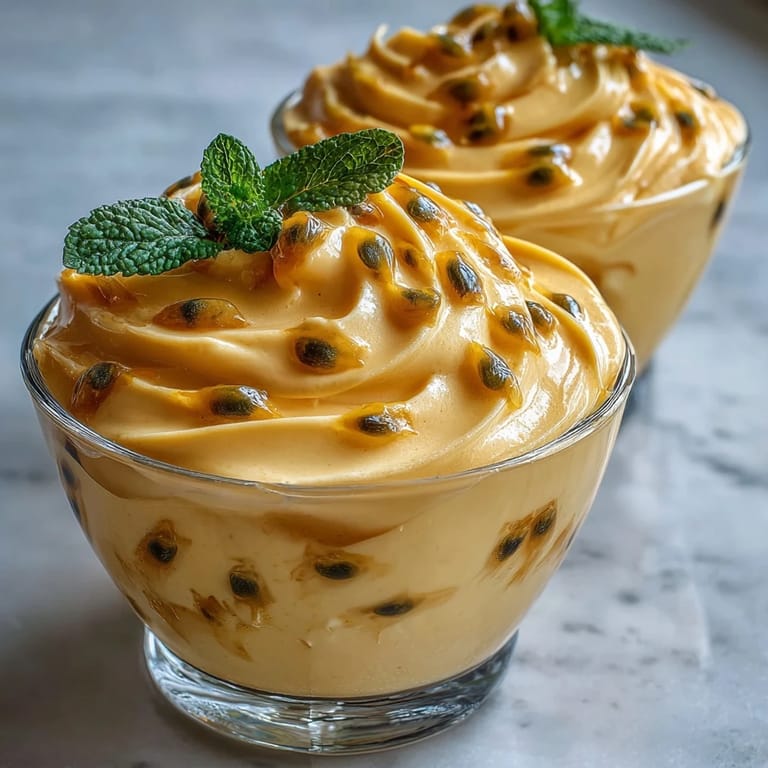
 There's a particular moment in summer when passionfruit arrives at the market, and the first thing I do is hold one up to the light, watching the juice slosh inside its wrinkled skin like liquid gold. That's when I know it's time to make this mousse, a dessert that tastes like pure sunshine captured in a glass. My neighbor once described eating it as tasting what happiness smells like, and honestly, I haven't found a better way to explain it. The tartness of the fruit against the sweetness of the cream, that airy texture that dissolves on your tongue—it became my go-to when I wanted to impress someone without spending hours in the kitchen.
I made this for a dinner party on the hottest evening of the year, and watching my guests' faces when they took that first spoonful—their eyes lighting up as the cold, tangy sweetness hit—made the whole thing worth it. Someone asked for the recipe right there at the table, fork still in hand, which felt like the ultimate compliment. It became the dessert I made whenever someone needed cheering up or celebrating, tucked into little glasses and finished with that perfect sprinkle of mint.
Ingredients
- Fresh passionfruits (6–8) or passionfruit pulp (1 cup strained): This is where all the flavor lives—the tartness and floral sweetness that makes the mousse special, so seek out fruits that feel heavy for their size and have wrinkled skin, which means they're at peak ripeness.
- Granulated sugar (1/3 cup for the fruit mixture): Just enough to balance the passionfruit's tang without making it cloying, and it helps the juice incorporate smoothly into the cream.
- Freshly squeezed lemon juice (2 tablespoons): A trick I learned to brighten the passionfruit flavor and keep it from tasting one-dimensional, adding complexity that makes people wonder what you've done.
- Heavy whipping cream (1 cup, cold): Cold cream is essential—it whips better and faster, and starting with something chilled means your mousse stays lighter longer as you fold everything together.
- Large egg whites (2): These create that signature airy texture that makes this mousse feel luxurious, turning it from a simple cream into something cloud-like and special.
- Granulated sugar (1/4 cup for the meringue): Added gradually to the whipped egg whites, this stabilizes them and creates glossy peaks that hold their shape when folded in.
- Fresh mint leaves and extra passionfruit pulp for garnish (optional): These aren't just decoration—the brightness of mint and the little burst of tartness from fresh pulp transform the final dish from good to memorable.
Tired of Takeout? 🥡
Get 10 meals you can make faster than delivery arrives. Seriously.
One email. No spam. Unsubscribe anytime.
Instructions
- Extract and strain the passionfruit:
- Cut each passionfruit in half and scoop out the pulp, seeds and all, into a fine mesh sieve set over a bowl. Use the back of a spoon to gently press the juice through while leaving the seeds behind—you'll end up with about a cup of liquid that's the color of sunset.
- Sweeten the passionfruit juice:
- Whisk the strained juice with 1/3 cup sugar and the lemon juice in a bowl, stirring until the sugar fully dissolves. Taste it—it should make your mouth pucker slightly before the sweetness kicks in.
- Whip the egg whites into meringue:
- Using a clean mixing bowl and beaters (any trace of yolk or grease will stop the whites from whipping), beat the egg whites until soft peaks form, then gradually add the 1/4 cup sugar while beating continuously. Stop when the peaks are stiff and glossy, holding their shape when you lift the beaters.
- Whip the heavy cream:
- In another bowl, whip the cold cream until soft peaks form—this should take only a minute or two if your cream started cold. Don't overbeat it or you'll end up with something grainy.
- Fold in the passionfruit mixture:
- Pour the passionfruit juice into the whipped cream and fold gently with a spatula, using a slow turning motion from bottom to top, rotating the bowl as you go. Stop as soon as the color is even and the mixture looks pale pink.
- Fold in the meringue:
- Add the egg white mixture in two additions, folding gently each time to keep all that air you've worked to incorporate. The mixture should be smooth, billowy, and the color of pale peach when you're done.
- Chill until set:
- Divide the mousse into serving glasses or ramekins, cover with plastic wrap, and refrigerate for at least 4 hours. The cold time lets the mousse firm up just enough while staying delicate and spoonable.
- Finish and serve:
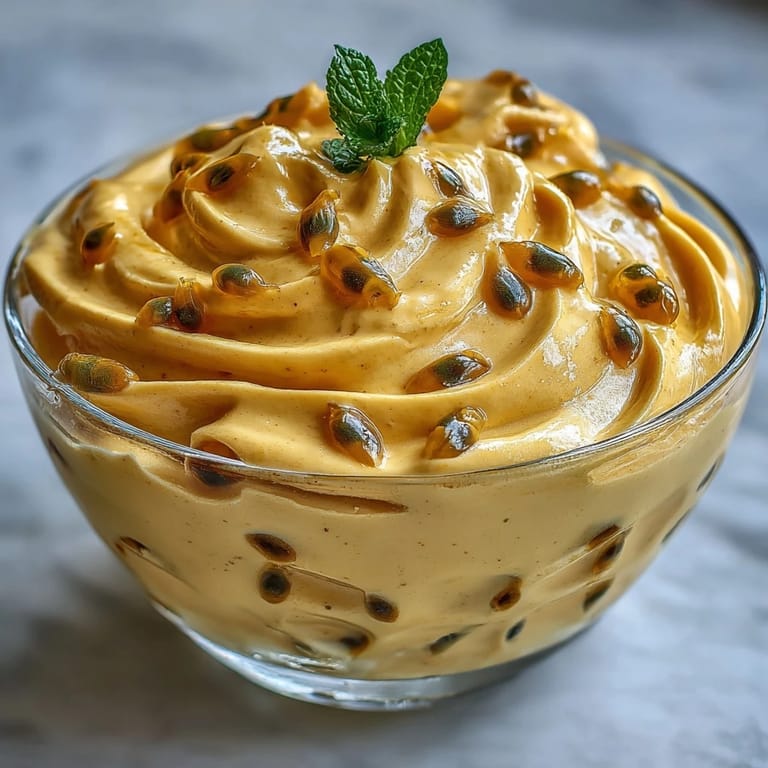
- Just before serving, top each glass with a spoonful of fresh passionfruit pulp and a single mint leaf if you have it. The contrast between the cold mousse and the bright fruit on top is where the magic happens.
 Save It
 One afternoon, I brought this mousse to a friend who was going through a rough time, thinking comfort food might help. She took one bite and suddenly had tears rolling down her face—not sad tears, but the kind that come when something small and bright reminds you that good things still exist. That's when I realized this dessert is about more than flavors; it's about moments of pure joy in a glass.
The Passionfruit Advantage
Passionfruit has this magical quality where it tastes both tart and tropical at the same time, catching people off guard in the best way. The first time someone tastes this mousse, they often can't quite name the flavor—it's not strawberry, not lemon, something more complex. That mystery is what keeps them coming back, and it's why this dessert works when you want to feel like you've done something special without the stress of complicated technique.
Texture is Everything
The whole structure of this mousse depends on understanding how foam works—egg white meringue and whipped cream are both just air trapped in fat or protein. When you fold them together gently, you're keeping all that air intact, which is why the texture is so important to get right. I've learned that a rubber spatula and a light hand matter more than any fancy equipment, and patience during the folding step is what separates a good mousse from an unforgettable one.
Serving and Storage Secrets
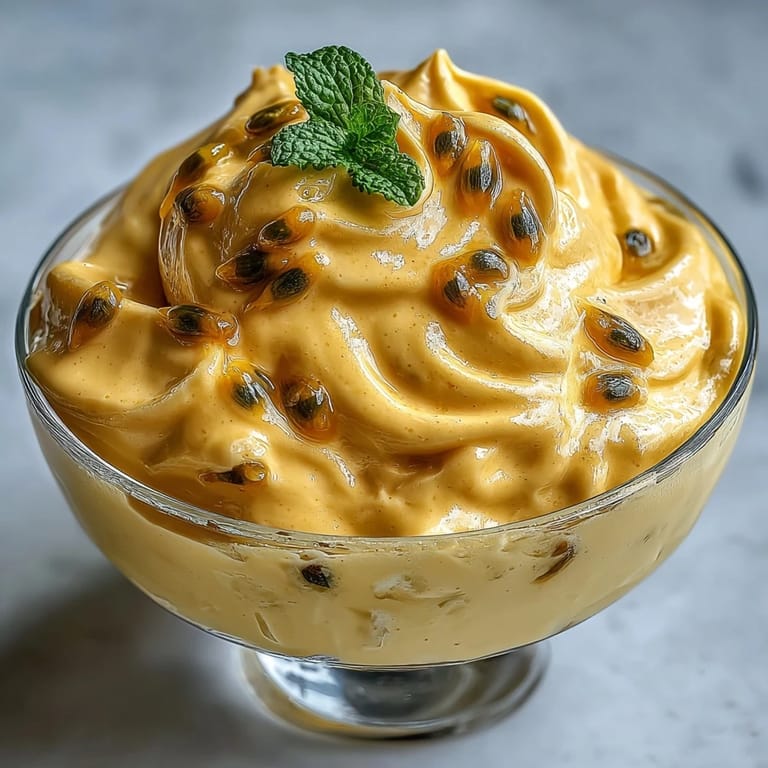
This mousse tastes best when served straight from the refrigerator, cold enough that it's firm but not ice-cold, which dulls the passionfruit flavor. You can make it up to 8 hours ahead, which is perfect if you're planning ahead for company. These little strategies make the difference between a dessert and a moment someone will remember.
- Chill your serving glasses or ramekins before filling them—the cold helps the mousse set faster and stay perfectly smooth.
- If you're nervous about using raw egg whites, use pasteurized eggs or find a brand specifically pasteurized for this purpose.
- Serve with crisp shortbread or coconut cookies on the side for a textural contrast that makes each spoonful feel more luxurious.
 Save It
 This mousse is proof that the best desserts don't need complexity—just good ingredients treated gently and time to chill. Every time I make it, I'm grateful for something this elegant that doesn't demand hours in the kitchen.
Common Questions About Recipes
- → Can I make passionfruit mousse ahead of time?
Yes, passionfruit mousse actually benefits from being made ahead. It needs to chill for at least 4 hours to set properly, but you can prepare it up to 24 hours in advance. Cover the serving glasses or ramekins tightly with plastic wrap to prevent absorption of other refrigerator flavors. The texture remains stable and the flavors may even develop more depth overnight.
- → What can I use instead of fresh passionfruit?
Frozen passionfruit pulp works beautifully as long as it's unsweetened and fully thawed before use. If using concentrate, dilute it slightly with water to achieve the right consistency. Some bakers successfully substitute mango purée or a combination of orange and pineapple juice for a different tropical profile, though the distinct floral-tart notes of passionfruit will be missing.
- → Why do I need to add egg whites to the mousse?
Egg whites provide structure and create that signature airy, cloud-like texture in mousse. When beaten to stiff peaks and folded in, they incorporate countless tiny air bubbles that prevent the heavy cream from becoming too dense. The proteins in egg whites also help stabilize the dessert, ensuring it holds its shape while remaining light and fluffy.
- → Is it safe to use raw egg whites in this dessert?
The egg whites in this mousse are not cooked, so use pasteurized egg whites if you have concerns about food safety, especially if serving children, elderly individuals, pregnant women, or anyone with compromised immunity. Pasteurized egg whites are available in most grocery stores and work exactly the same way in the preparation.
- → How do I know when the mousse is properly set?
After at least 4 hours of chilling, the mousse should hold its shape when a spoon is dipped into it. It should feel firm to the touch but still yield slightly when pressed gently—similar to the texture of soft-set gelatin. If it still seems too loose after 4 hours, give it another hour or two. Properly set mousse will have a silky, smooth consistency that doesn't collapse.